
Rochdale SpeedometersSM
August 2026
Forward-Looking Six to Nine Months

TRANSCRIPT
We’re now entering the second half of the year, with markets in a better place than they were just a few months ago but not quite in the all-clear zone. The first half was defined by three big forces: The continued AI-led capital spending boom, a resilient but uneven consumer and the energy shock tied to the Iran War and the temporary closure of the Strait of Hormuz.
The key message for August is this: The GDP has slowed but looks to be stabilizing at a level above trend, earnings strength is remarkable and the consumer continues to spend. However, the path forward is still not a full green-light environment. The global disruption to energy markets remains, the AI build-out is putting pressure on prices and the Federal Reserve has a new leader, Kevin Warsh, whom global markets are still trying to understand. That is why our overall tone remains constructive but disciplined.
At our most recent Investment Strategy Committee meeting, we made only one Speedometer change. We moved the labor market up slightly, given recent stability that we view as an improvement from where we were earlier in the year. Outside of the labor market adjustment, we looked hard at our inflation forecast, corporate earnings, current market valuations and the Fed. So let’s take those one at a time.
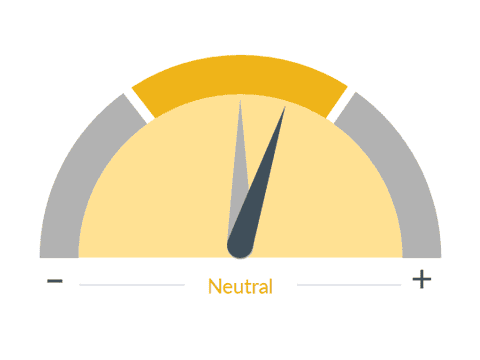
■ Previous Month ■ Current Month
Labor Market
What we see
Research has shown that employment and income expectations, along with credit availability, are the most important determinants of consumer spending. Personal consumption amounts to roughly 70% of GDP, making a strong labor market essential to a healthy economy.
Dial 1: Labor Market, 1:27— First, labor markets: We moved the labor market dial higher, as economic data continues to show more resilience than expected.
Initial jobless claims fell to 188,000 in July, their lowest level since 1969. Let’s put some context around that. We have an extra 140 million people in the country, an extra 84 million more people working and a larger labor force. That speaks volumes when we look at the actual numbers, not just the percentages.
So, what's AI's role in this story? The trend of technology layoffs continues, which can be seen as a proxy to measure AI's impact. But we are starting to see job openings for specialized technology roles tied to AI, and this is a pattern that we've seen over history.
Transformative technologies do drive a change in the makeup of the labor force. Think: Long division on paper to a calculator, and then to an Excel spreadsheet. The job rules have changed at each level, and when it comes to wages, they do continue to increase. However, growth has recently slowed. When we take into consideration the purchasing power of those wages, it has been reduced given the rise in inflation we've seen from energy prices.
This brings us to inflation, where we did not make a change, but I want to call attention to its recent volatility. We have experienced three waves of inflation in the past 18 months: First, tariffs back in April of last year, then the ongoing energy shock and then some emerging signs from the AI build-out.
Those first two, tariffs and the energy shock, are supply driven, which is typically harder to manage. But looking at each source of recent inflation, there is a case to be made that it fades over time. In the end, tariffs have been lower than initially feared last year and today’s energy shock will fade once a deal is reached and the Strait of Hormuz opens. Yes, it is likely that a new geopolitical premium is present, but not one that will sustain oil above $100 dollars a barrel for a prolonged period.
And AI’s impact on inflation, which is demand driven, is likely to become disinflationary in the long run and is likely to have a lower peak but a longer duration of impact, as the build-out is still continuing to accelerate.
We recognize the erosion of consumers’ purchasing power; however, consumers continue to spend. And while their contribution to the GDP has slowed, the AI-driven increase in corporate spending has picked up that slack and is an increasingly growing driver of the GDP, and for that matter, of corporate earnings too.
Second-quarter earnings have been remarkable, accelerating at a pace not seen since the recovery from the slowdown during COVID — only today, we are not recovering from a global pandemic and earnings estimates for the next few quarters continue to rise. Those expectations raise the bar, and we continue watching for signs of slowdowns, but broad earnings strength in both AI and non-AI-related companies continue surprising to the upside.
For markets, that is a reasonably constructive mix: A stable but no longer hot labor market, wage growth that has moderated while purchasing power has been eroded from elevated inflation but is a clear catalyst to sustained lower energy prices and a Fed that can remain patient rather than feeling forced to tighten further, while earnings strength that’s broad, not just in the largest technology names, continues to drive the markets higher, as valuation ratios are off from their highs.
Our base case for the rest of the year is constructive but not complacent. We expect that, in the end, a deal will be reached that reopens the Strait of Hormuz. We expect earnings to remain supportive and the economy to continue growing.
But the risks are clear: Inflation could stay longer if a deal remains elusive and the Fed could remain hawkish for longer in response, while the midterm election cycle and reduced communication from the Fed could add policy and market volatility as we move into the fall.
So the Speedometer message this month is simple: Optimistic, but still mostly neutral. For investors, that means stay invested, stay diversified and stay alert.
Important Information
RBC Rochdale, LLC is an SEC-registered investment adviser and wholly-owned subsidiary of City National Bank. Registration as an investment adviser does not imply any level of skill or expertise. City National Bank is a subsidiary of Royal Bank of Canada.
The information presented does not involve the rendering of personalized investment, financial, legal or tax advice. This presentation is not an offer to buy or sell, or a solicitation of any offer to buy or sell any of the securities mentioned herein.
Certain statements contained herein may constitute projections, forecasts and other forward-looking statements, which do not reflect actual results and are based primarily upon a hypothetical set of assumptions applied to certain historical financial information. Certain information has been provided by third-party sources and, although believed to be reliable, it has not been independently verified and its accuracy or completeness cannot be guaranteed.
Any opinions, projections, forecasts, and forward-looking statements presented herein are valid as of the date of this document and are subject to change.
Rochdale Speedometers are indicators that reflect forecasts of a 6-to-9-month time horizon. The colors of each indicator, as well as the direction of the arrows represent our positive/negative/neutral view for each indicator. Thus, arrows directed towards the (+) sign represents a positive view which in turn makes it green. Arrows directed towards the (-) sign represents a negative view which in turn makes it red. Arrows that land in the middle of the indicator, in line with the (0), represents a neutral view which in turn makes it yellow. All of these indicators combined affect RBC Rochdale’s overall outlook of the economy.
RBC Rochdale, LLC, its managed affiliates and subsidiaries, as a matter of policy, do not give tax, accounting, regulatory, or legal advice, and any information provided should not be construed as such.
All investing is subject to risk, including the possible loss of the money you invest. As with any investment strategy, there is no guarantee that investment objectives will be met and investors may lose money. Diversification does not ensure a profit or protect against a loss in a declining market. Past performance is no guarantee of future results.
©2026 RBC Rochdale, LLC. All rights reserved.


 Top
Top