
Rochdale SpeedometersSM
July 2026
Forward-Looking Six to Nine Months

TRANSCRIPT
We’re now entering the second half of the year with markets in a better place than they were just a few months ago, but not quite in the all-clear zone. The first half was defined by three big forces: the continued AI-led capital spending boom, a resilient but uneven consumer and the energy shock tied to the Iran War and the temporary closure of the Strait of Hormuz.
The key message for July is this: the forward view has improved, but it is still not a green-light environment. That is why our overall tone remains constructive but disciplined.
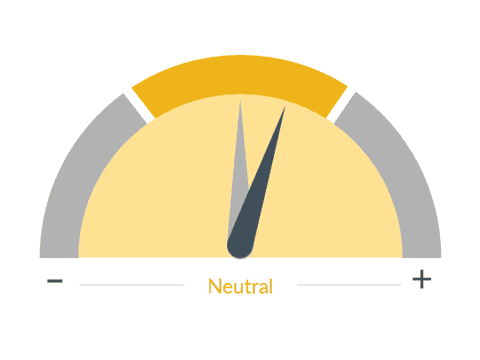
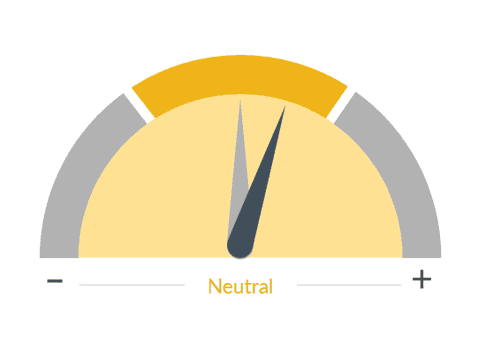
At our most recent investment committee meeting, we made two Speedometer changes, both modest improvements. First, we moved leading indicators up, given the near-term improvement across economic survey data and corporate spending. Second, we moved up our score on Energy Costs, as near-term risks from the Iran war are notably reduced. Let’s take those one at a time.
■ Previous Month ■ Current Month
Leading Indexes
What we see
We look at a number of indices that have a strong track record in anticipating turns in business cycles. These include measures of production, employment, income, and sales, which have a strong correlation to subsequent economic activity. These indices provide a comprehensive summary gauge of future U.S. economic conditions, with an average lead of 12 months at business cycle peaks and 6 months at business cycle troughs.
Dial 1: Lead Indexes, 1:08— We moved up leading indicators because the economy continues to show more resilience than many expected. Manufacturing and services activity are still expanding. Business investment remains supported by AI, data centers, infrastructure and industrial spending. And while corporate surveys aren’t in boom territory, they are generally in growth mode.
The consumer is also hanging in. Spending has not cracked, even after the spring energy shock. But there is a clear divide. Higher-income households continue to benefit from strong markets, home equity and wage gains. Lower-and middle-income households are feeling more pressure from food, housing, credit card costs and gas. However, broad credit characteristics have not deteriorated and relief from high gas prices may help in the near-term. Ultimately, the economy continues to grow despite a challenged lower-end consumer.
So, the forward indicators are better, but we stayed in the neutral band due to challenges in rate-sensitive areas like housing and autos and we do have our eye on the November midterms which could hurt business sentiment and put pressure on leading indicators.
■ Previous Month ■ Current Month
Energy Costs
What we see
Significant changes in energy/oil prices can have important but differing impacts on the overall economy. Higher energy prices act as a tax on consumers and businesses, absorbing money that would normally be used to buy other goods. However, they can also boost production and investment in the mining and energy sectors of the economy. Lower energy prices can increase consumer spending and lower manufacturing costs.
Dial 2, Energy Costs, 2:08— We also moved the Energy Costs Speedometer higher. The change reflects the fact that the worst of the energy shock appears to have passed, at least for now.
During the Iran War, energy markets reacted exactly as you would expect when the Strait of Hormuz was effectively shut. Oil prices spiked, gasoline prices rose and inflation fears came back into the conversation quickly. Since then, the temporary cease-fire and the reopening of Hormuz have helped energy prices retreat. U.S. crude is back near pre-war levels and gasoline prices have started to move lower from their late-May peak.
That is the good news. The caution is that the Strait of Hormuz is open, but not fully normal. Ship traffic has improved, but it remains well below pre-war levels. Some shippers are still cautious. The U.S. and Iran are still negotiating. There’s a difference between “reopened” and “back to normal.” So, energy has shifted from a flashing red risk to an improving yellow reading. It is less threatening than it was, but still capable of disrupting inflation, consumer confidence and market sentiment if the deal doesn’t hold.
That brings us to inflation. The next slate of inflation reports will be important because the market wants to know whether lower energy prices can give the Federal Reserve more breathing room. Headline inflation should benefit from the decline in oil and gasoline. Core inflation is trickier. Housing costs are still sticky, services prices are still firm and there may be temporary noise from travel, lodging and even the World Cup.
Our view is that inflation is improving, but unevenly. Lower energy helps. A cooler labor market actually helps. But the Fed still needs tangible evidence of lower price pressure. The new Fed Chair, Kevin Warsh was deliberately aggressive on bringing inflation down at the June meeting; however, last week he noted that the Iran resolution lowers inflation risk.
And that leads to the jobs number from Friday. The June employment report was softer, with payroll growth slowing to 57,000 jobs. Prior months were also revised lower. At first glance, that looks like a meaningful slowdown. But we would describe it more as a return to normal than a warning sign. The unemployment rate actually declined to 4.2%, though that was partly because fewer people were counted in the labor force.
The broader message is that the labor market remains stable. Wage growth is moderate and declining. Layoffs are not surging across the economy. And while AI-related job cuts are getting attention, they have not yet created broad labor market weakness.
For your portfolio, that is a reasonably constructive mix: slower hiring, but not a collapsing labor market; inflation still elevated, but likely helped by lower energy; and a Fed that can remain patient rather than feeling forced to tighten further.
Now, looking ahead, earnings season starts next week and this may be the most important catalyst for the market in July. The bar is higher than it was last quarter. Stock prices have already recovered significantly and investors are expecting companies to deliver. The question is not just whether companies beat estimates. The bigger question is what management teams say about the second half.
We’ll be listening for whether earnings are still being driven by real demand, or just cost cutting; whether AI spending is still accelerating; how much higher energy and input costs are pressuring margins; and whether the consumer is still spending, especially in travel, autos, restaurants and discretionary categories.
The good news is that earnings growth is broader than just the largest technology names. Industrials, health care, energy and select areas tied to infrastructure and capital spending are participating. But the market is still leaning heavily on AI and that means earnings commentary from the major technology companies will carry a lot of weight.
Our base case for the second half is constructive, but not complacent. We expect calmer geopolitical impact if the Hormuz reopening holds and energy prices remain contained. We expect earnings to remain strong.
This should support continued economic growth. But the risks are clear: inflation could stay sticky, the Fed could keep rates higher for longer, energy could flare again and the midterm election cycle could add policy and market volatility as we move into the fall.
So the Speedometer message this month is simple: optimistic, but still mostly neutral. Leading Indexes improved because the forward growth picture has stabilized. Energy Costs improved because the worst of the oil shock has faded. But we have a limited number of green speedometers because there is still a delicate balance between growth and inflation.
For investors, that means stay invested, stay diversified and stay alert. The second half could be calmer than the first, but, as we’ve come to learn in this environment, calm doesn’t mean quiet.
Important Information
RBC Rochdale, LLC is an SEC-registered investment adviser and wholly-owned subsidiary of City National Bank. Registration as an investment adviser does not imply any level of skill or expertise. City National Bank is a subsidiary of Royal Bank of Canada.
The information presented does not involve the rendering of personalized investment, financial, legal or tax advice. This presentation is not an offer to buy or sell, or a solicitation of any offer to buy or sell any of the securities mentioned herein.
Certain statements contained herein may constitute projections, forecasts and other forward-looking statements, which do not reflect actual results and are based primarily upon a hypothetical set of assumptions applied to certain historical financial information. Certain information has been provided by third-party sources and, although believed to be reliable, it has not been independently verified and its accuracy or completeness cannot be guaranteed.
Any opinions, projections, forecasts, and forward-looking statements presented herein are valid as of the date of this document and are subject to change.
Rochdale Speedometers are indicators that reflect forecasts of a 6-to-9-month time horizon. The colors of each indicator, as well as the direction of the arrows represent our positive/negative/neutral view for each indicator. Thus, arrows directed towards the (+) sign represents a positive view which in turn makes it green. Arrows directed towards the (-) sign represents a negative view which in turn makes it red. Arrows that land in the middle of the indicator, in line with the (0), represents a neutral view which in turn makes it yellow. All of these indicators combined affect RBC Rochdale’s overall outlook of the economy.
RBC Rochdale, LLC, its managed affiliates and subsidiaries, as a matter of policy, do not give tax, accounting, regulatory, or legal advice, and any information provided should not be construed as such.
All investing is subject to risk, including the possible loss of the money you invest. As with any investment strategy, there is no guarantee that investment objectives will be met and investors may lose money. Diversification does not ensure a profit or protect against a loss in a declining market. Past performance is no guarantee of future results.
©2026 RBC Rochdale, LLC. All rights reserved.


 Top
Top